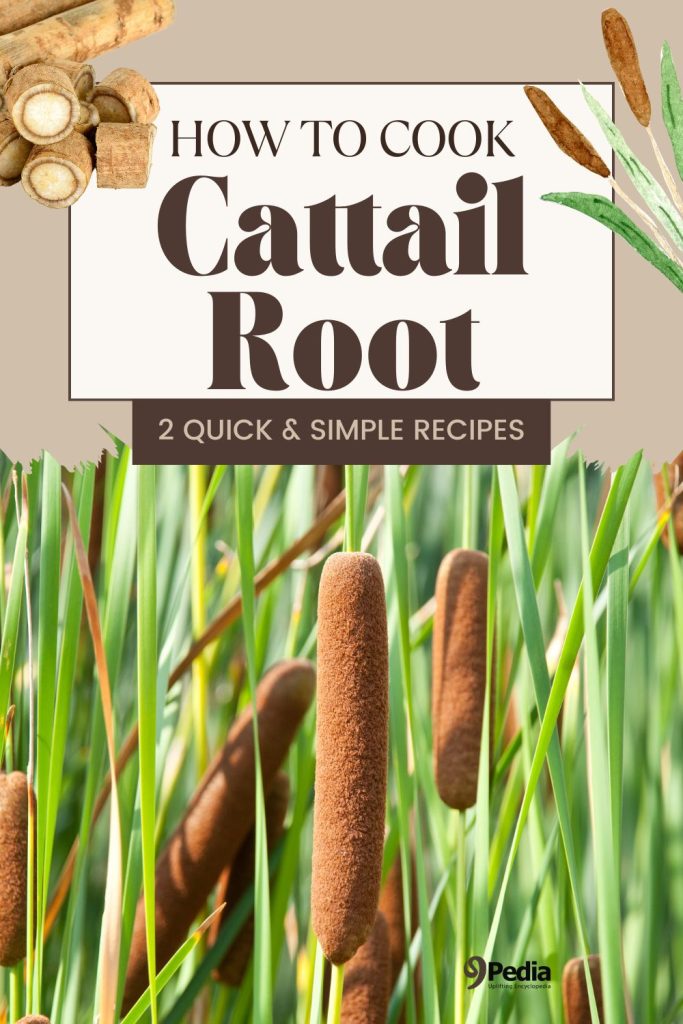
Want to learn how to cook cattail root and enjoy this wild edible? Continue reading this article and find out how.
Cattail roots have saved people from starvation during tough times of war or drought. Like potatoes, they contain 46% starch, 24% plant-based protein, and 11% sugars. The leaves are rich in vitamin C, while the seeds store essential fatty oils. Before we show you how to cook cattail, here is how to harvest and prep this amazing wild edible.
How to Harvest Cattail Roots
There are two main species of cattail, the narrow-leaved cattail (Typha angustifolia) which has narrower leaves and is commonly found in brackish or less dense wetlands, and the broad-leaved cattail (Typha latifolia) which has wider leaves and typically thrives in freshwater marshes. They both have distinctive brown, sausage-shaped flower spikes and are both edible.
- Harvesting: The rhizomes grow horizontally in the soil and can be dug up from wet, muddy areas. Younger rhizomes tend to be more tender.
- Cleaning: Wash the rhizomes thoroughly to remove mud and debris.
- Peeling: Remove the tough outer layer to expose the inner, starchy core.
While the roots are generally safe and edible, ensure the cattails are harvested from clean environments, as they can absorb pollutants and toxins from contaminated water. Avoid harvesting from areas with industrial runoff or untreated sewage.

How to Cook Cattail
For those wondering how to cook cattail, these versatile roots and shoots offer a variety of preparation methods for both savory and sweet dishes.
- In spring, baked cattail roots make a delicious delicacy, while in winter, they can be pickled and added to salads.
- When young shoots begin to grow from the roots, they can be eaten raw, mixed into salads, or mashed after boiling, similar to potatoes.
- Cattail roots with shoots can also be braised with potatoes or used as a sauce for meats, mushrooms, or vegetable stews.
- Dried cattail roots can be ground into flour, which can be used to bake bread, prepare pancakes, or make biscuits.
- The roasted roots can even be used to make a healthy coffee substitute.
- In some parts of Eastern Europe, village tavern keepers would boil cattail roots with sugar, then cool the liquid and mix it with red wine to add strength.
Read Also: How to Cook Chicory Root – 2 Savory Chicory Root Recipes
Cattail provides a reliable wild food source if prepared properly. Whether you’re exploring wild foods or looking for unique ingredients, learning how to cook cattail opens up a world of delicious and nutritious possibilities.
Share on Pinterest ❤️